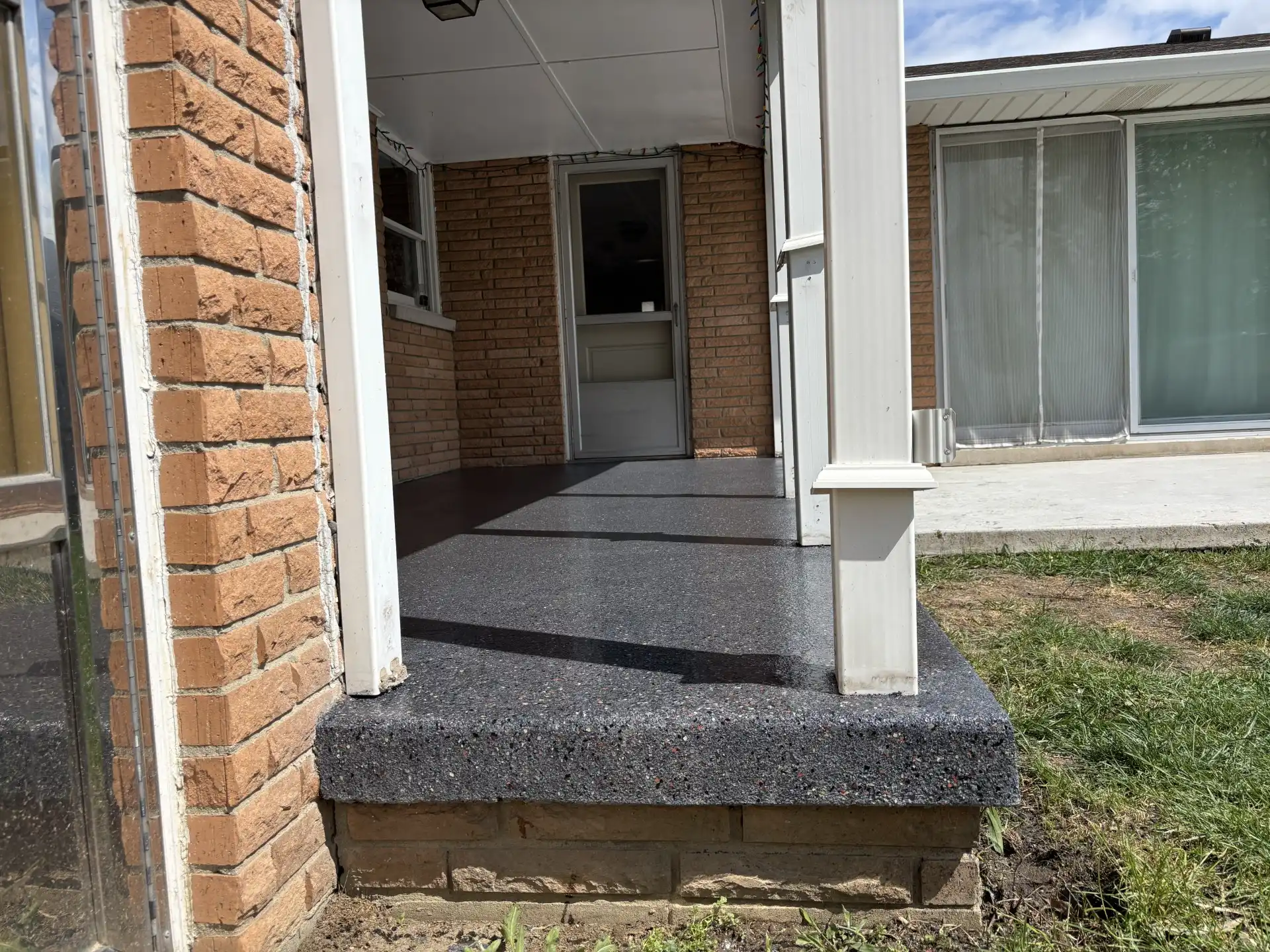
A coated patio is one of the lowest-maintenance outdoor surfaces you can own, but low maintenance isn't no maintenance. These maintenance tips for concrete patio coatings will keep your outdoor space looking like install day for years, through everything Central Indiana weather delivers.
Guy Coatings installs coated patios across Indianapolis, Carmel, Fishers, Noblesville, and Zionsville, and the homeowners who get the most life out of their floors all do the same handful of simple things. Here's the full list.
Quick Answer: Sweep and rinse regularly, clean with mild soap and a soft brush, avoid harsh solvents and metal shovels, use magnesium or calcium chloride ice melt instead of rock salt, protect the surface with furniture pads and a grill mat, and inspect each spring for chips to touch up.
Routine Cleaning
The good news: a properly coated patio is non-porous, so dirt and spills sit on the surface instead of soaking in.
Weekly
Sweep off leaves, pollen, and debris. Organic material left sitting on a patio can leave tannin staining on any surface, and it's easier to prevent than remove.
As Needed
Rinse with a garden hose. For most Central Indiana patios that's enough between deeper cleanings.
Deeper Cleaning
Use warm water, a mild dish soap or pH-neutral cleaner, and a soft-bristle push broom. Rinse thoroughly. Avoid harsh solvents, degreasers, and acidic cleaners, which can dull the polyaspartic topcoat over time. Skip abrasive pads entirely.
Winter Care in Central Indiana
Indiana winters are the toughest season for outdoor concrete, coated or not.
Choose the Right Ice Melt
Magnesium chloride and calcium chloride are safe on coated surfaces. Avoid high-sodium rock salt, which is harsher on concrete and any surrounding landscaping. A quality coating handles salt exposure well, but the right product is still easier on everything around it.
Shovel Carefully
Use a plastic-edged shovel. Metal blades and scrapers can gouge the topcoat. Never chip at ice with a metal tool.
Why Coated Patios Handle Winter Better
Uncoated concrete absorbs water, which then freezes and expands roughly 9%, cracking the slab from the inside. Over dozens of freeze-thaw cycles each winter, that causes the flaking and pitting called spalling. A sealed surface blocks water entry, which stops the damage cycle before it starts.
Protecting the Finish
Most patio coating damage comes from things sitting on it, not weather.
Furniture
Put felt pads or rubber feet on chair and table legs. Lift furniture instead of dragging it. Heavy metal furniture with narrow feet concentrates weight into small points, so wider glides help.
Grills and Fire Features
Use a grill mat. Grease drips wipe off a coated surface easily, but catching them is easier still. Keep fire pits on a heat-resistant pad rather than directly on the coating.
Planters
Move planters occasionally so moisture doesn't sit trapped underneath in the same spot for months.
Vehicles and Equipment
Coated patios handle foot traffic beautifully but aren't built for vehicle loads. Keep trailers and heavy equipment off unless it was specified for that use.
Seasonal Inspection and Touch-Ups
Walk your patio each spring and look for chips, gouges, or scratches. Small damage caught early can be touched up. Small damage ignored becomes an entry point for moisture.
Check drainage while you're out there. Make sure downspouts direct water away from the slab and the foundation, and that water isn't pooling against the house. The EPA's guide to redirecting downspouts shows how to send roof runoff onto your lawn or garden instead of onto paved surfaces. This matters for more than the patio, since standing water at the foundation drives moisture up through slabs and is one of the biggest risks to coatings on older Central Indiana homes.
Why a Quality System Needs Less Maintenance
Not every coated patio maintains the same. The system underneath determines how much upkeep you're signing up for.
Sealers and Paints
Sealers wear off in a few years and need constant reapplication. Concrete paint peels and fades under Indiana sun, then has to be stripped and redone.
One-Day and Single Topcoat-Only Systems
A polyurea and polyaspartic base isn't designed to be a moisture barrier. It leaves little margin against the vapor pressure that pushes up through every slab, so problems tend to show up at corners and edges where water collects.
The Epoxy Base System
We build patios on our penetrating, slow-cure, 100% solid, professional-grade moisture-barrier epoxy base, with our 95% solids, UV-stable, chemical- and salt-resistant polyaspartic topcoat applied the next day, over the flake color of your choice. The moisture-barrier base holds back far more vapor pressure than a polyaspartic or polyurea base can, giving the patio a wide safety margin against moisture. The topcoat resists UV so the color stays true instead of yellowing.
Better system, less maintenance, fewer surprises. For the full explanation, see our guide to concrete floor solutions.
When to Call a Professional
Handle routine cleaning yourself. Call us for:
- Chips, gouges, or delamination anywhere on the surface
- Bubbling or blistering, which signals a moisture issue underneath
- Cracks appearing through the coating
- Dulling or yellowing across large areas
- A coating installed by someone else that's failing
Homeowners across Carmel, Noblesville, and Zionsville regularly call us to evaluate and re-do failing patios installed by one-day companies.
Get Your Patio Evaluated for Free
Whether you have a coated patio that needs attention or bare concrete you want to transform before summer, a free evaluation tells you exactly where you stand.
Guy Coatings provides free, no-pressure estimates for homeowners across Indianapolis, Carmel, Fishers, Noblesville, and Zionsville. We inspect the slab, check drainage and moisture risk, and give you a flat quote with a clear scope.
Request your free patio quote at guycoatings.com →
Frequently Asked Questions
Can I pressure wash my coated patio?
Yes, use lower pressure and a wide fan tip, held well back. High pressure at close range can be done wrong and damage the finish. A hose and soft brush handle almost all cleaning.
Will the coating fade in the sun?
A UV-stable polyaspartic topcoat holds its color. Exposed epoxy without a polyaspartic topcoat ambers over time, which is why epoxy belongs underneath, not on the surface.
Is it slippery when wet?
It can be, but slip resistance can be built into the topcoat with aluminum oxide or aggregate, matched to how you use the space. Pool decks and walkways get more grip than covered patios.
How often does a coated patio need resealing?
It doesn't. Unlike a sealer, a properly installed epoxy-base and polyaspartic system isn't on a reapplication schedule. Routine cleaning is the maintenance.
Do you serve my city?
Yes. Guy Coatings serves Indianapolis, Carmel, Fishers, Noblesville, Zionsville, Westfield, Geist, and surrounding Central Indiana communities.
Ready to Upgrade Your Patio?
Ready to upgrade your patio? Get a free quote from Guy Coatings, Central Indiana's polyaspartic and epoxy concrete coating specialists. Visit guycoatings.com or call us today.
We've coated patios, garages, basements, and commercial floors across the greater Indianapolis area, and every project includes full surface prep, a moisture-barrier epoxy base, and a polyaspartic topcoat built for Indiana seasons.